


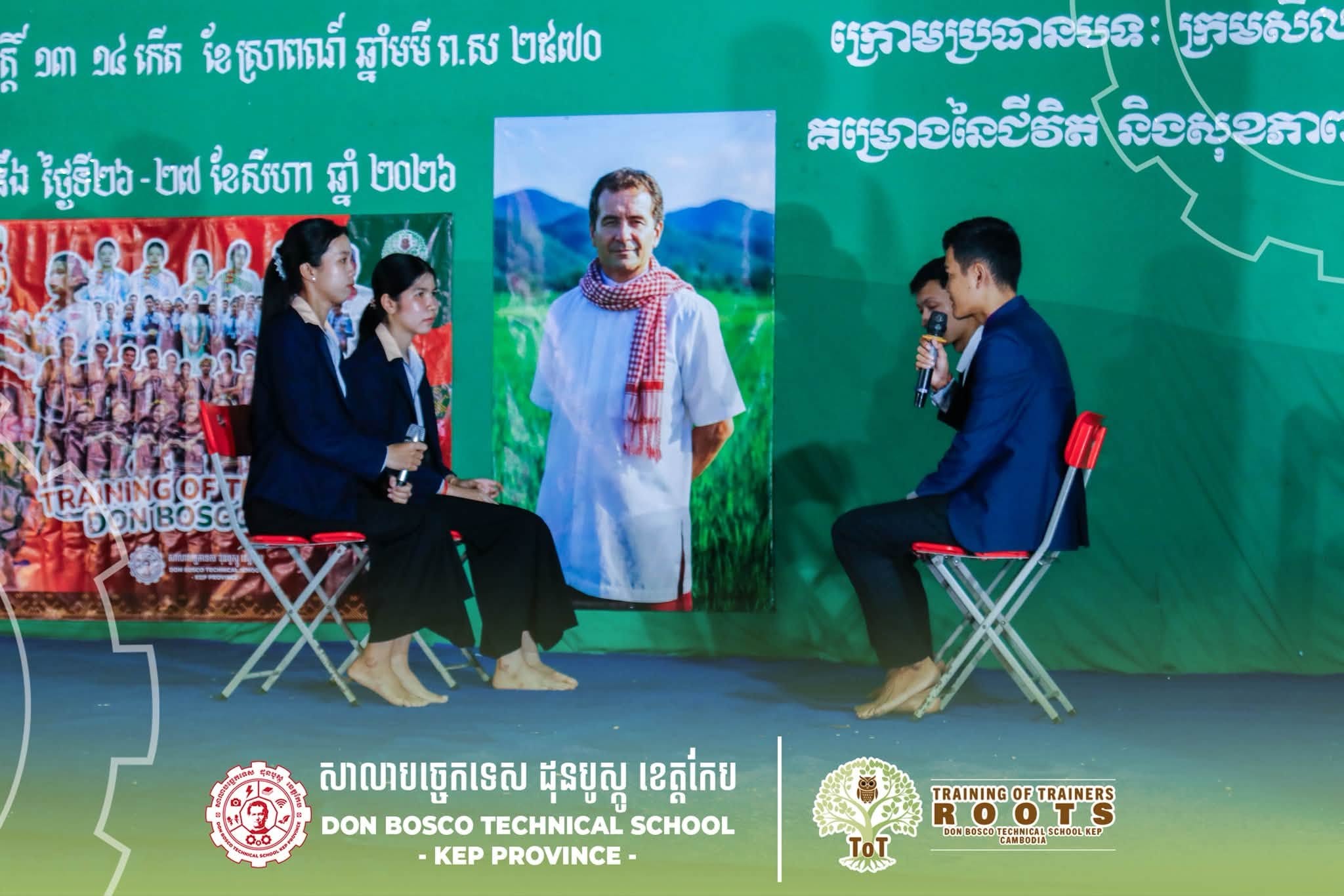
Kep Province, Cambodia, 26–27 August 2026 — More than 300 students and teachers gathered at Don Bosco Technical School in Kep for two days of training focused on ancestral wisdom, care for the environment, and the Salesian Preventive System.
The event, held at the Sok‑San‑Camp Sports Hall, brought together young people from across Cambodia, including Indigenous communities, under the theme “Training of Trainers on Ancestral Wisdom, Care for Our Common Home and Salesian Preventive System.” Participants engaged in dialogue on ethics, holistic health, and life projects, combining traditional Indigenous practices with Catholic educational methods.
The program coincided with the feast day of Blessed Ceferino Namuncurá (1886–1905), a Mapuche youth educated by the Salesians in Argentina who aspired to become a priest “to help his people.” Beatified in 2007, Namuncurá has become a source of inspiration for Indigenous students in Cambodia, particularly those from the Jarai, Tampung, Kreng, Bunong, and Kuy communities.
Central to the training was the Circle of Word, an ancestral method of dialogue where communities gather to share experiences, wisdom, and traditions in a collective reflection. This was paired with the Synodal method of dialogue, promoted by Pope Francis in Evangelii Gaudium as part of a “Church which goes forth.” Both approaches emphasize listening, respect, and spiritual inspiration.
Students and teachers divided into groups to reflect on contemporary challenges such as internet addiction, financial responsibility, family life, depression, and hope for the future. Despite heavy monsoon rains in Kep Province, the sessions continued with resilience and solidarity. A moment of meditation was also dedicated to the victims of the Nepal‑Tibet flood.
Organisers said the training aimed to strengthen Don Bosco’s Technical and Vocational Education and Training (TVET) programmes by integrating Indigenous wisdom with Salesian pedagogy, offering young people tools to face modern challenges while remaining rooted in their cultural heritage.