

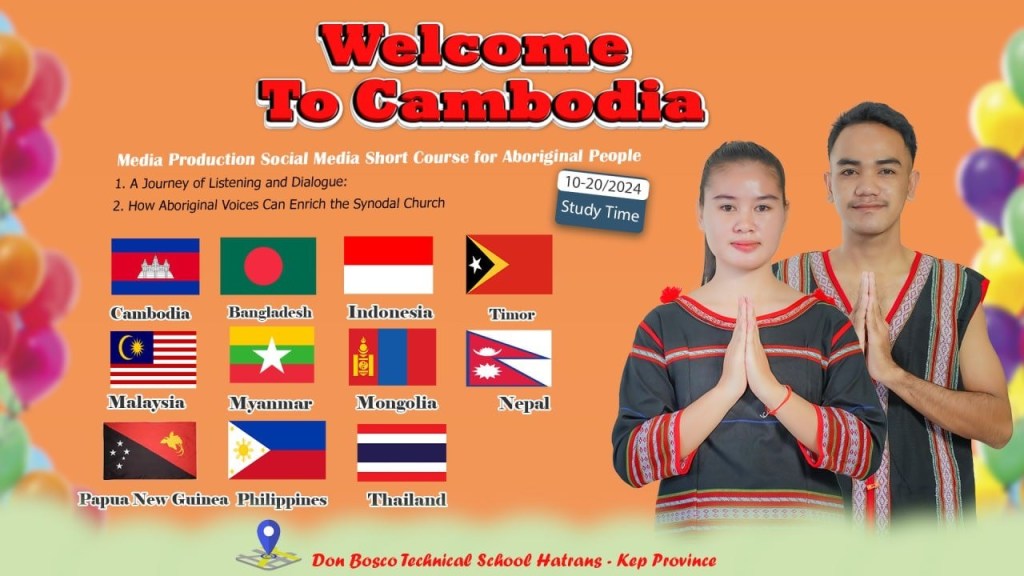
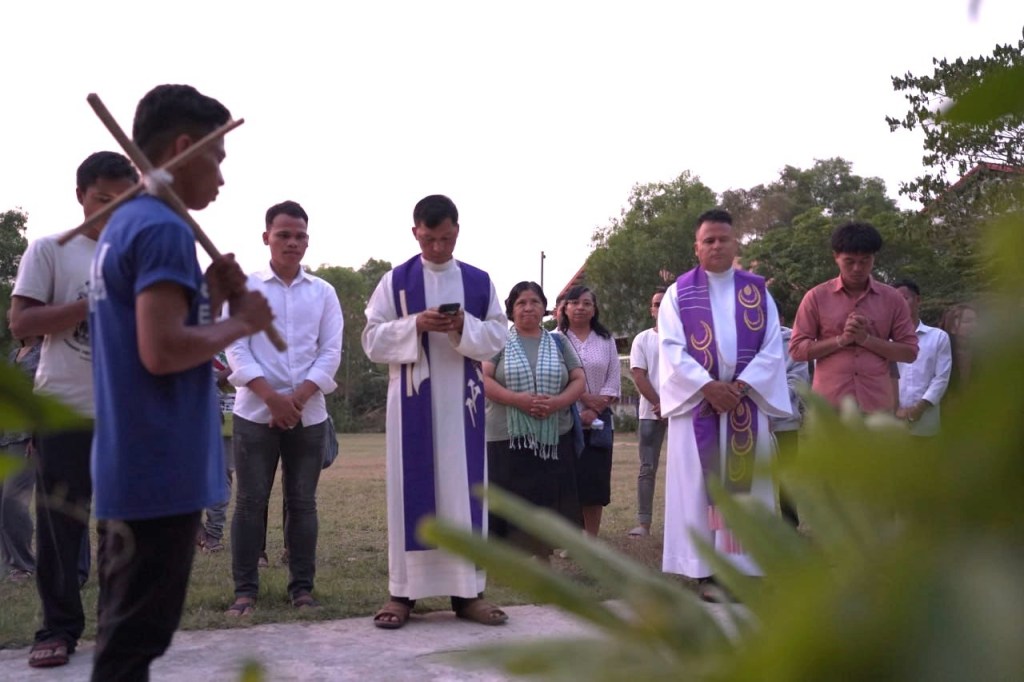
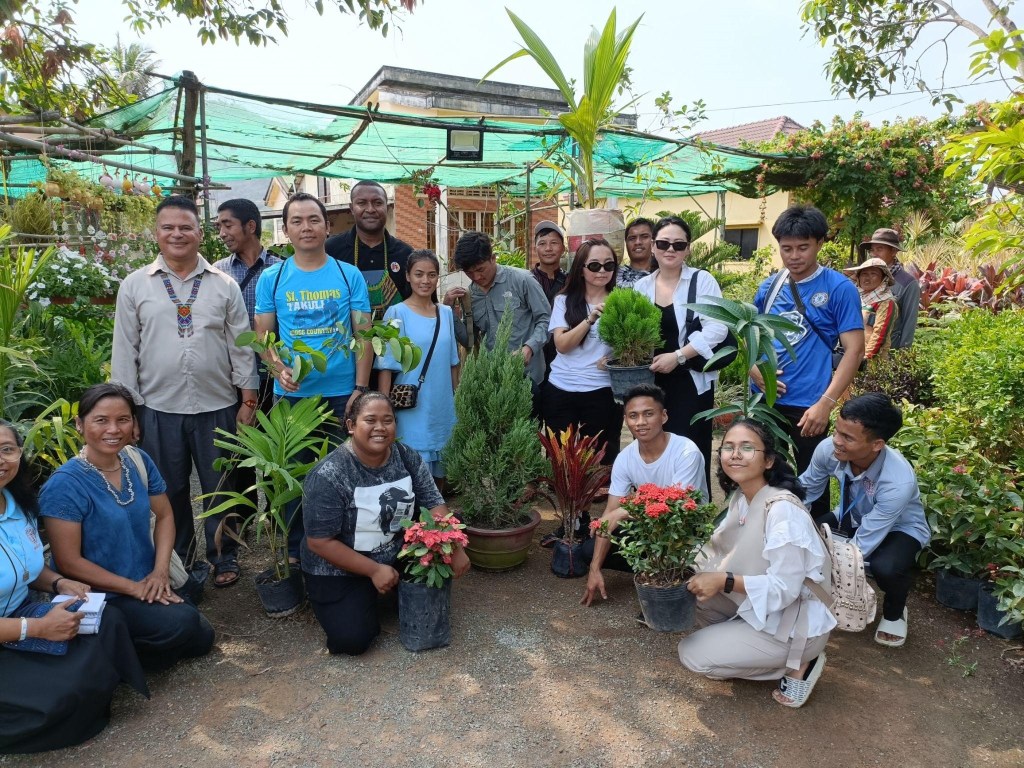
Kep, Cambodia – The young aboriginal delegates of ten Asian and Oceanian countries participated in a very special Way of the Cross this Lenten Friday 15th of March at the Don Bosco Technical School Campus in Kep Province, Cambodia. It was celebrated within the program of the IPs Media Production Short Course for young aboriginals and how indigenous youth can contribute to the synodal Church.
The Way of the Cross was dedicated to the prayer for peace and for the care of Mother Earth, especially asking God to stop wars and conflicts around the Planet, as well as to the rise of consciousness on every person to protect the environment and to guarantee a better future for all generations. Every delegation prepared a Station of the Way of the Cross with natural and cultural elements from countries like Myanmar, Thailand, Cambodia, Nepal, Mongolia, Indonesia, Papua New Guinea, Malaysia and East Timor. Each delegation is representing the aboriginal peoples of their countries, with their identity, language and traditions. “All our indigenous ancestral traditions should lead us to God the Most High,” said Salesian Fr. Jolino Vieira from East Timor, during his homily the day before. The Way of the Cross was led by Fr. Mariano Hla Ko, diocesan priest from Myanmar, representing the Kayan people, who made a special prayer for the peace and understanding in his own country. The two young men from Myanmar that would attend the meeting, had to suspend their coming due to the difficult situation in their country.
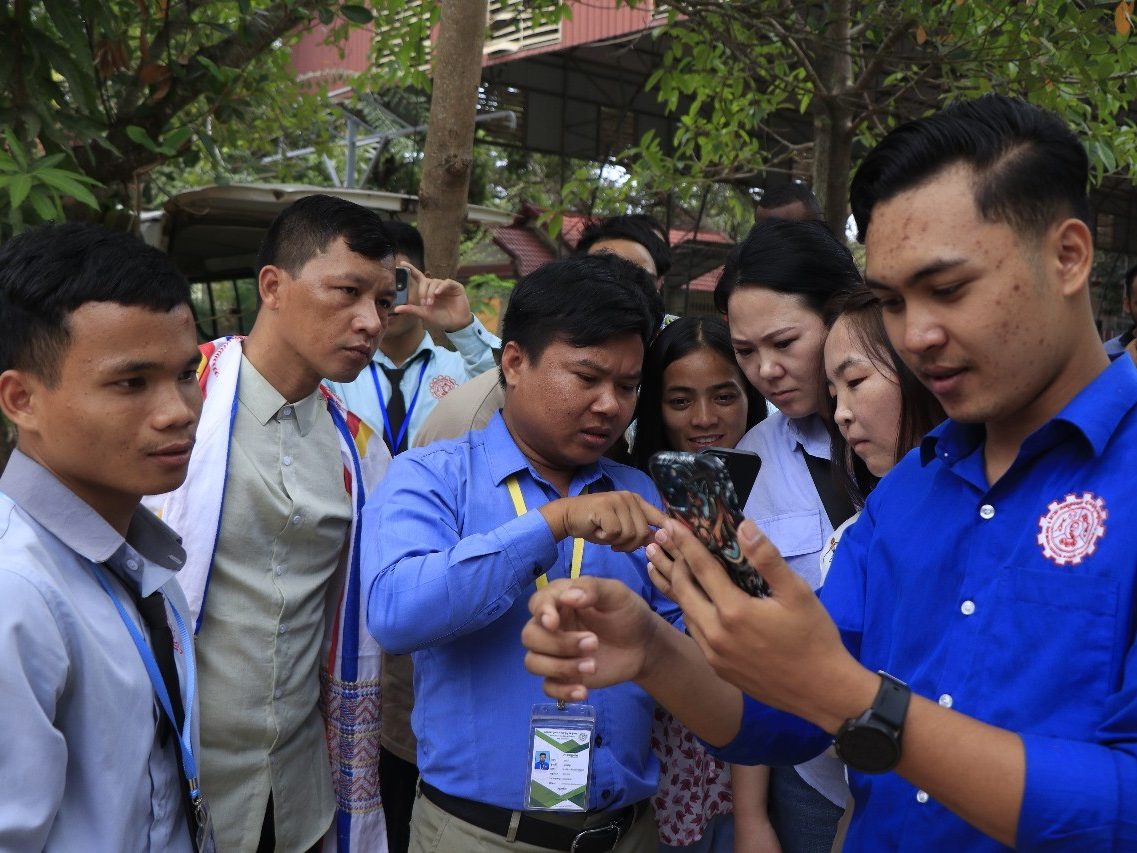
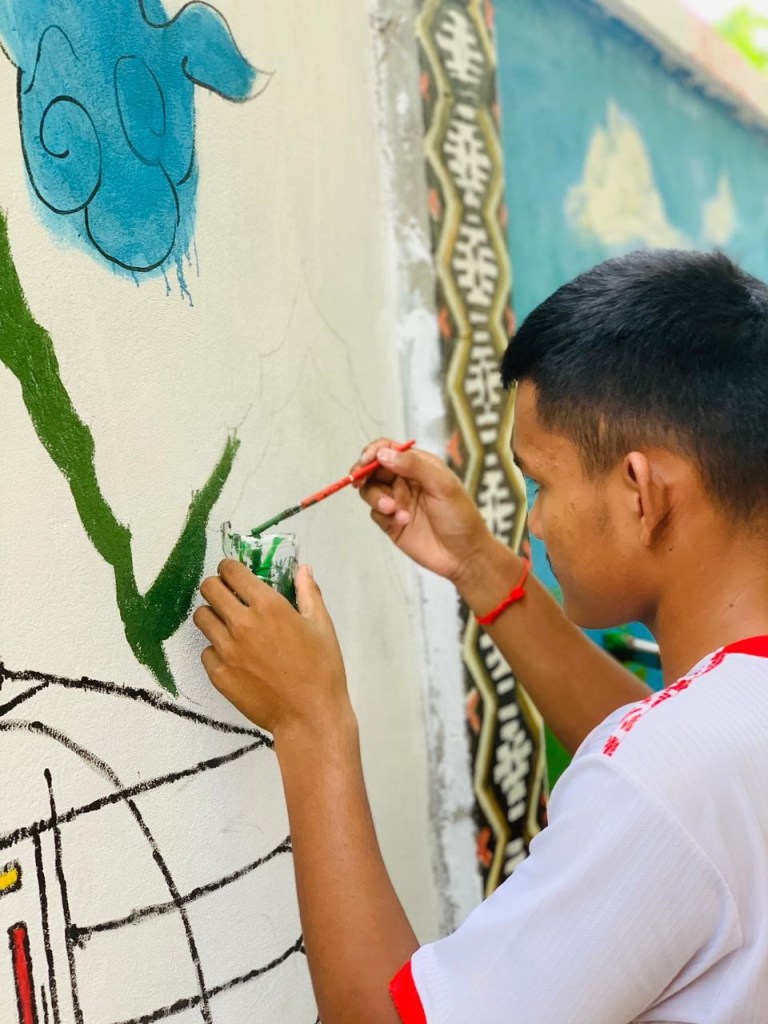
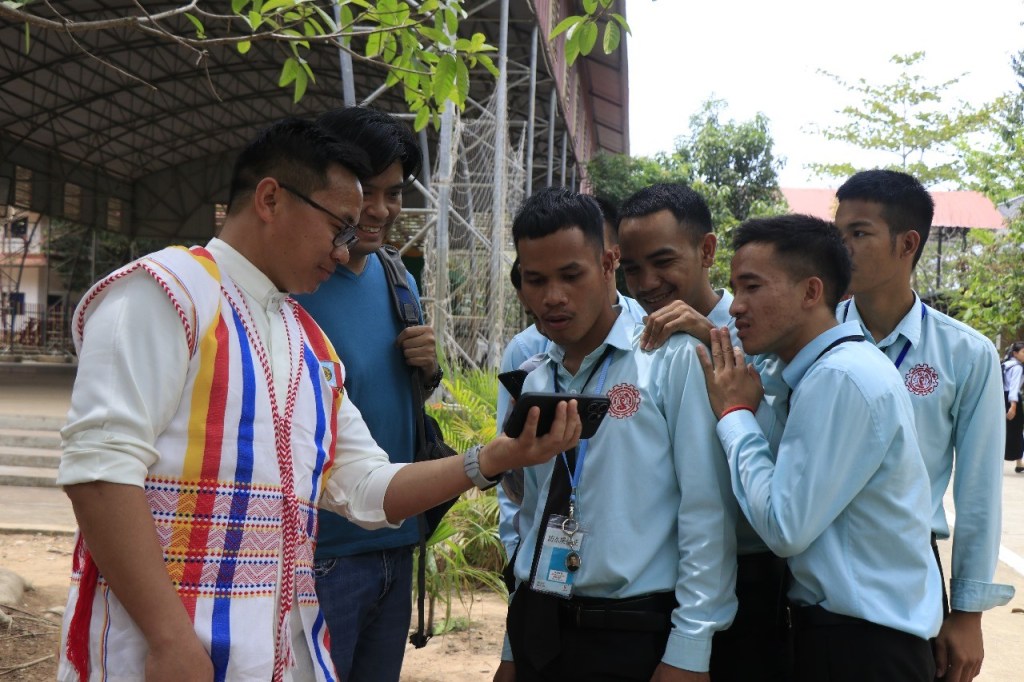
The Media Production course includes the painting of a wall for delegation, the composition of the song “Meeting of the Asian Tribes” and the production of photography, videos and podcasts using just a cell phone and all the tricks of the digital technology. “One of the facts of the development of digital technologies is the simplification of gadgets,” explains Fr. Ly Samnang, MA digital communication and director of the course. “In the beginning of the Internet revolution, digital technology was seen as a privilege of some technology geniuses from where we must depend, but the reality is that digital technology goes towards the possibility that everybody, even without training, can use technologies and it is a power for communities such as our aboriginal groups,” he said during the introduction of the course.
Digital technology allows us to break the barriers of language and cultures, while being great tools for the preservation and promotion of the environment, something essential for the survival of aboriginal communities. Today it is possible to guard vast extensions of forests using drones, connecting to satellites and getting clean energy from solar panels. Making possible that aboriginal communities, farmers and others get trained on those technologies, would empower the possibilities for a better future and hope for the Planet and for humanity.

 Don Bosco Cambodia - DBFC