

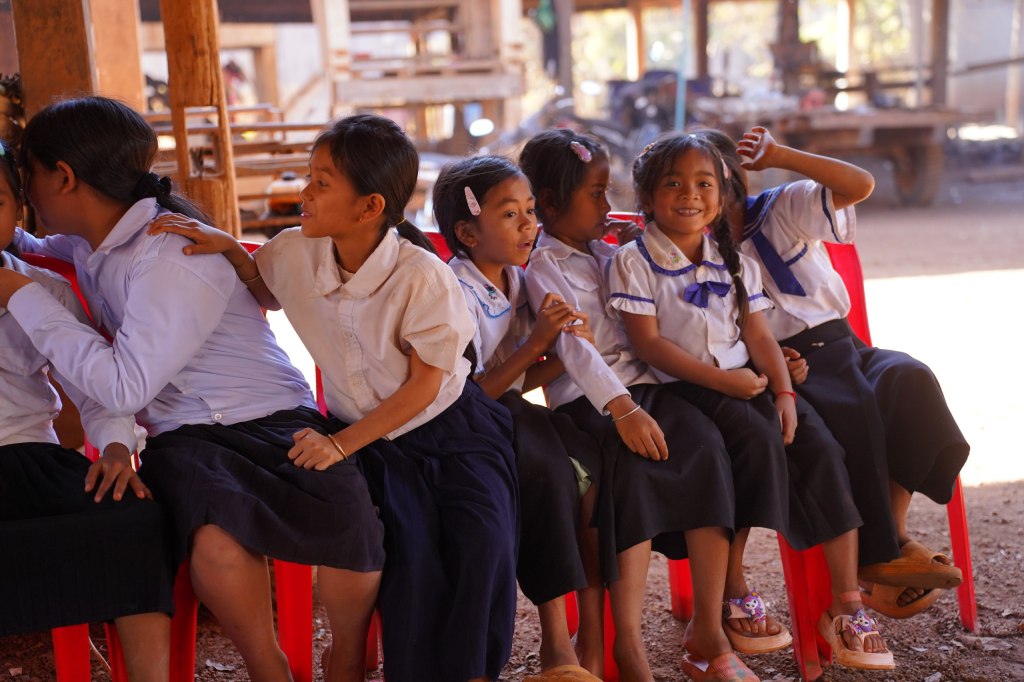
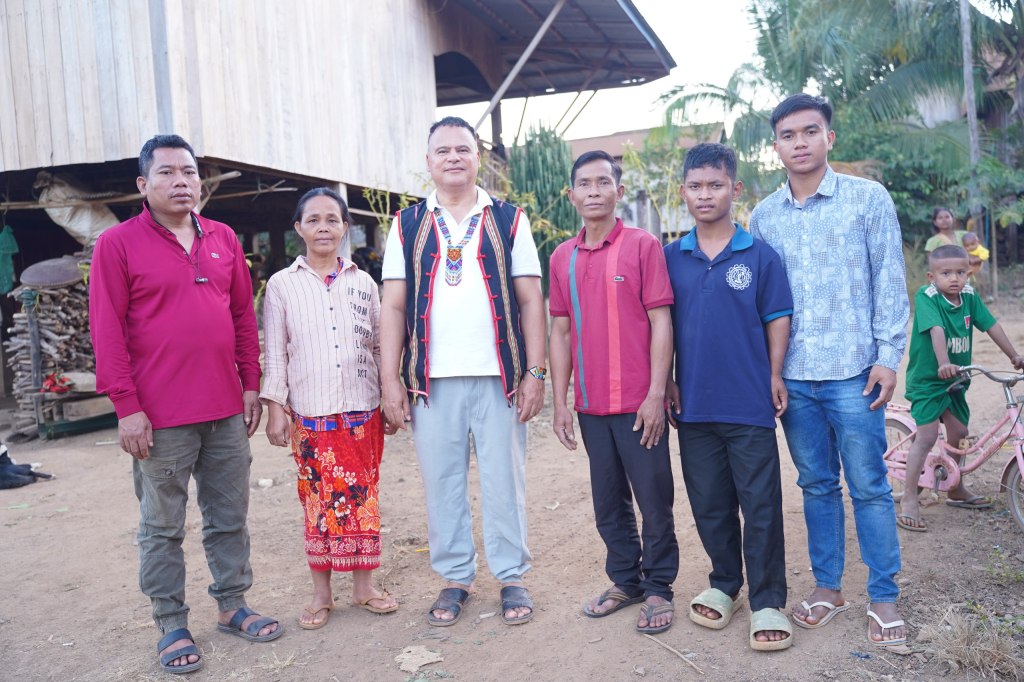
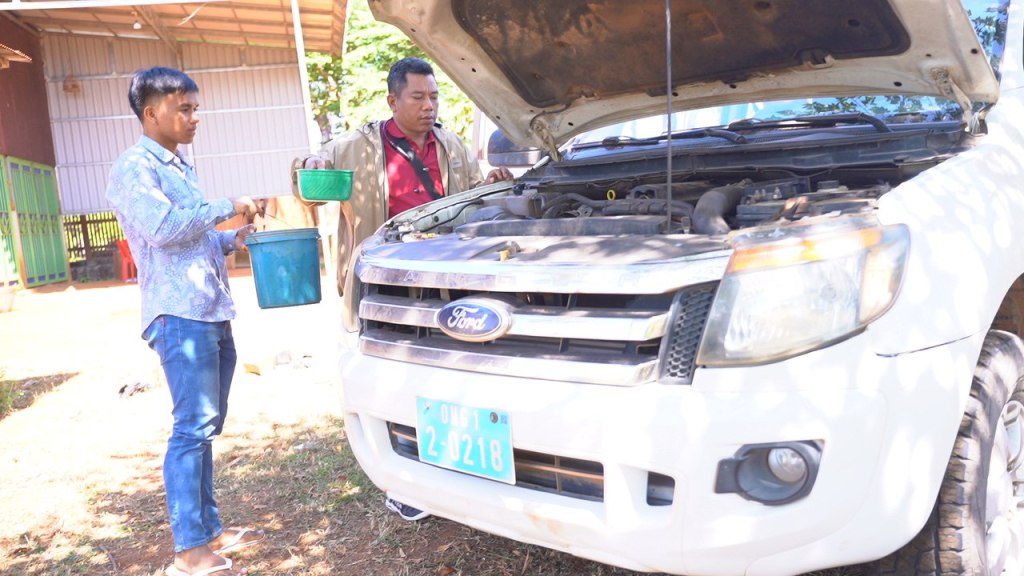
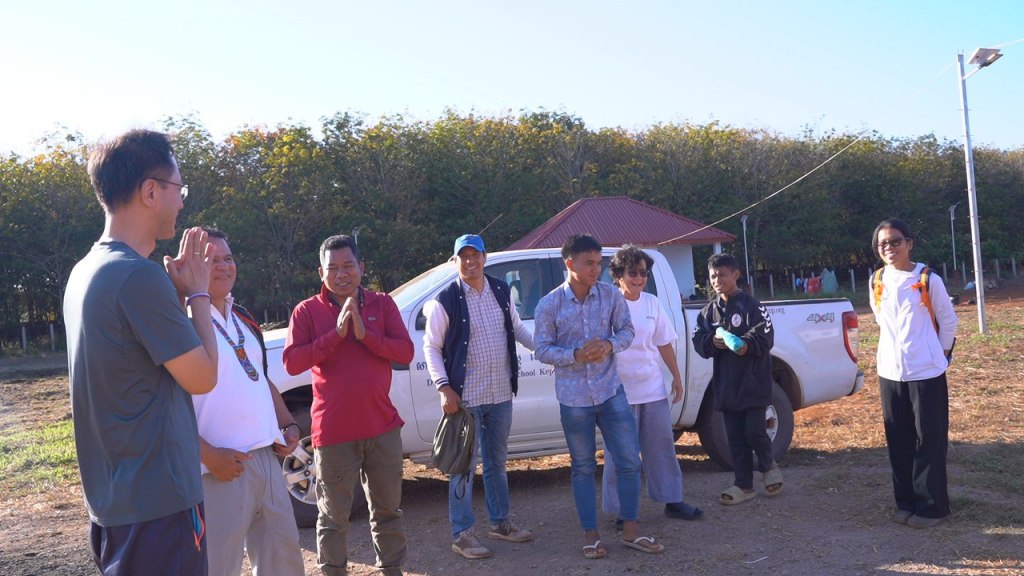
(DBFC-Kep) – The Don Bosco Brother Sun Scholarship Program for Rural and Indigenous Children and Youth of Cambodia, based at Don Bosco Kep, intends to reach the most remote villages of the kingdom to guarantee that children and youth do not abandon school, a tendency that has been increasing with the use of cell phones and the Internet, affecting children, specially boys, that lost the interest in studies, creating even more situations for the fragile economies of their family. Every year Fr. Samnang Albeiro Rodas paid a visit to the north of Cambodia to visit the villages where children are being supported by the program. This year, he was accompanied by teacher Gnil Vy, coordinator of the agro-vocational program of Don Bosco Kep and three Indigenous students from Information Technology and Media Communication: Mr. Lvan and Mr. Dom, Jarai from Ratanakiri and Mr. Lay, Kuy from Preah Vehear.
The journey took 1,500 km around the north of Cambodia: From Kep to Mondolkiri, Ratanakiri, Preah Vehear and Oddar Meanchey.
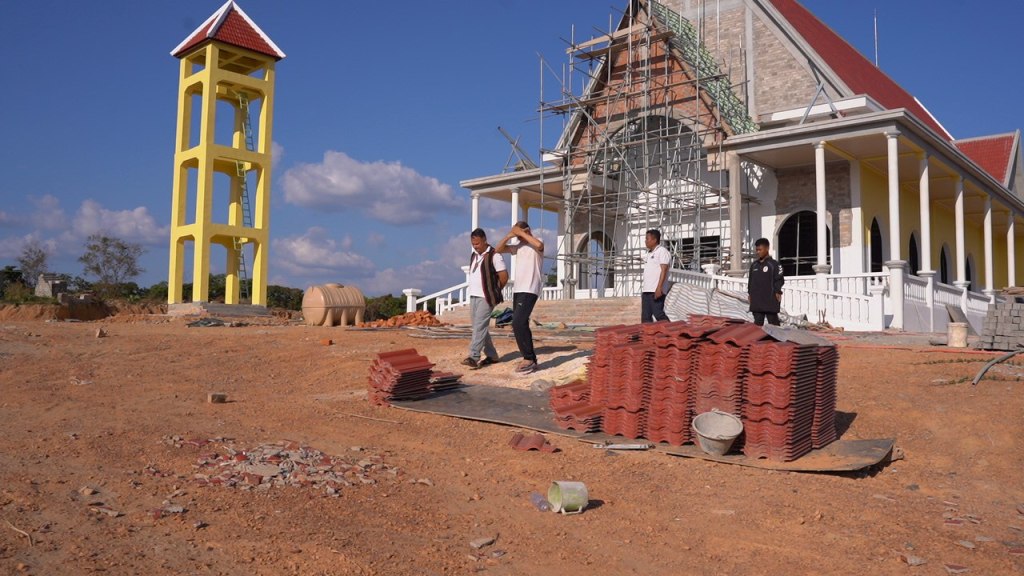
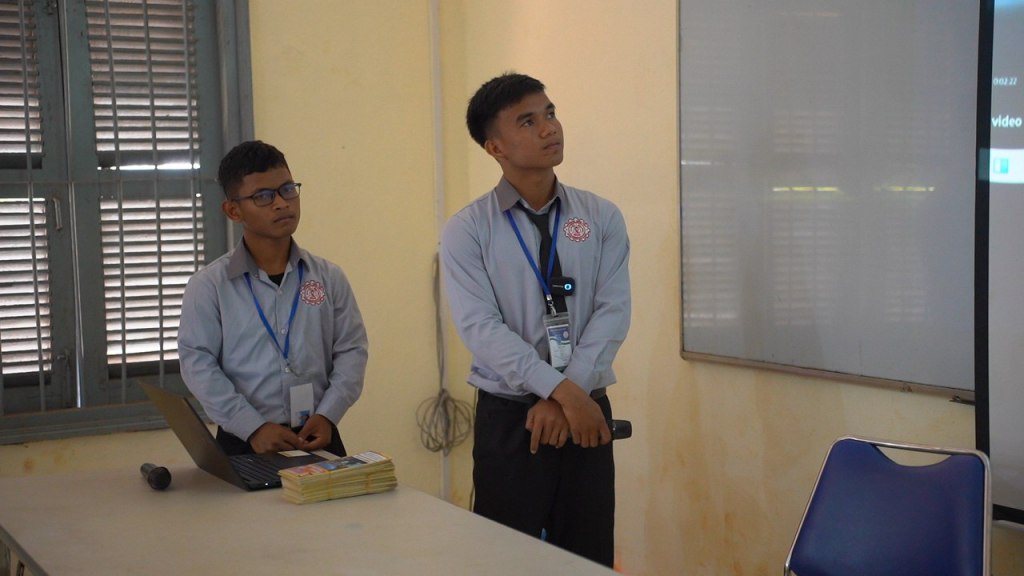
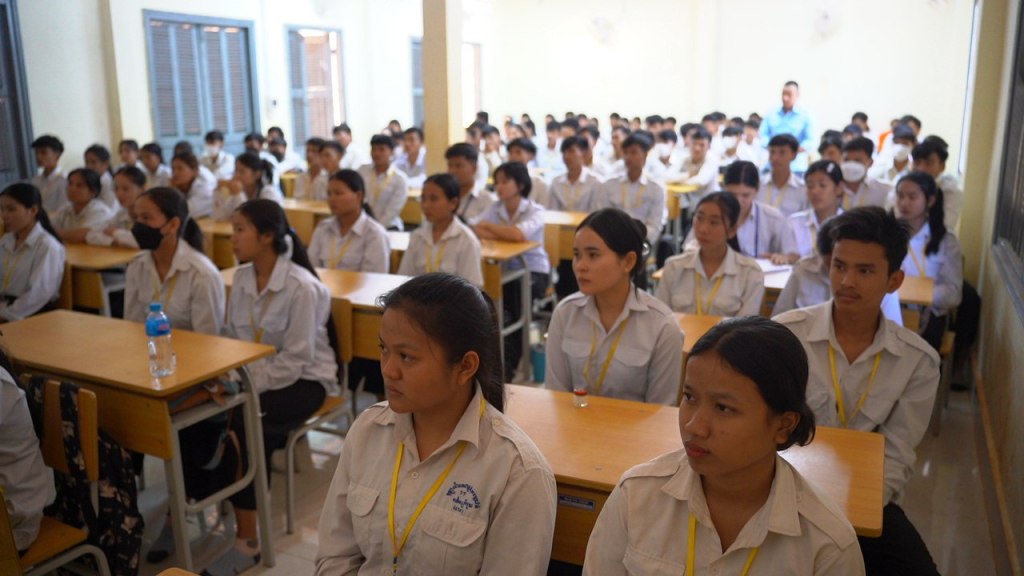
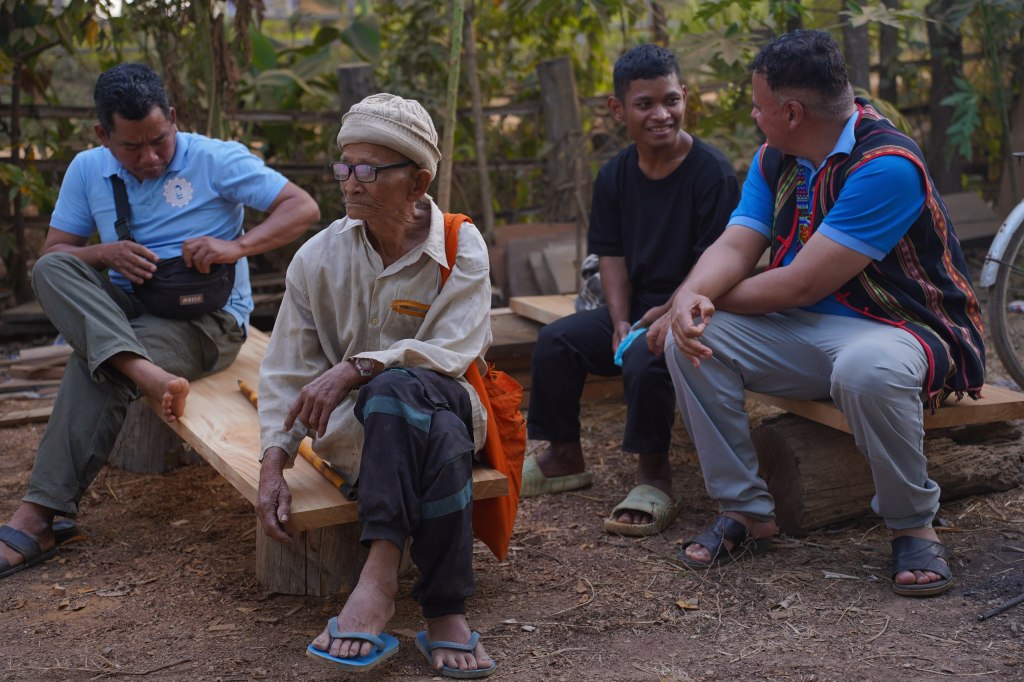
In Mondolkiri they visited the Catholic community of Fr. Juan Solorzano in Kaev Seima of the Bunong People, where there is a church under construction and a dynamic community around the service to the Indigenous families. They visited also the Salesian Sisters (FMA), Sr. Dory Helena and Sr. Liza in Sen Monorom city. In Ratanakiri, they went to the districts of Bokeo and O’Yadao of Jarai communities and promoted the Don Bosco Kep Technical School at the O’Yadao High School with 12th grade students, mostly Jarai and Tampuong. Fr. Ivan Campana, the leader of the Catholic Church in Ratanakiri, presented also the project of a kindergarten at the Chrung Jarai village, where Indigenous children will have a space of education and recreation. In Preah Vehear they visited a a Kuy Indigenous communities at the Chok Chey village. Finally, they arrived to the Tromphea Prasat District of Oddar Meanchey, to the Bophai Computer Centre, where former Don Bosco Kep IT teacher, Mr. Bophai, leads a program of complementary education for local children, with the support of some benefactors, including Don Bosco Brother Sun Program.
Along the way it was possible to see the sad reality of environment degradation with indiscriminate burning of forests to extend the agricultural and plantation frontier, without regulations. Burnings that generate a large amount of smoke on the roads and in the towns, so harmful to public health, while destroying the environment, reducing rainfall and preparing for a greater heat wave. Another factual problem that was possible to see in the Indigenous villages is the situation of male teenagers abandoning the school, attracted by the Internet addiction and becoming vulnerable to many situations. In these cases, it is important to continue the Don Bosco mission to provide education, training and formation to the new generations, but also to their families, to prevent future problems.



 Don Bosco Cambodia - DBFC