


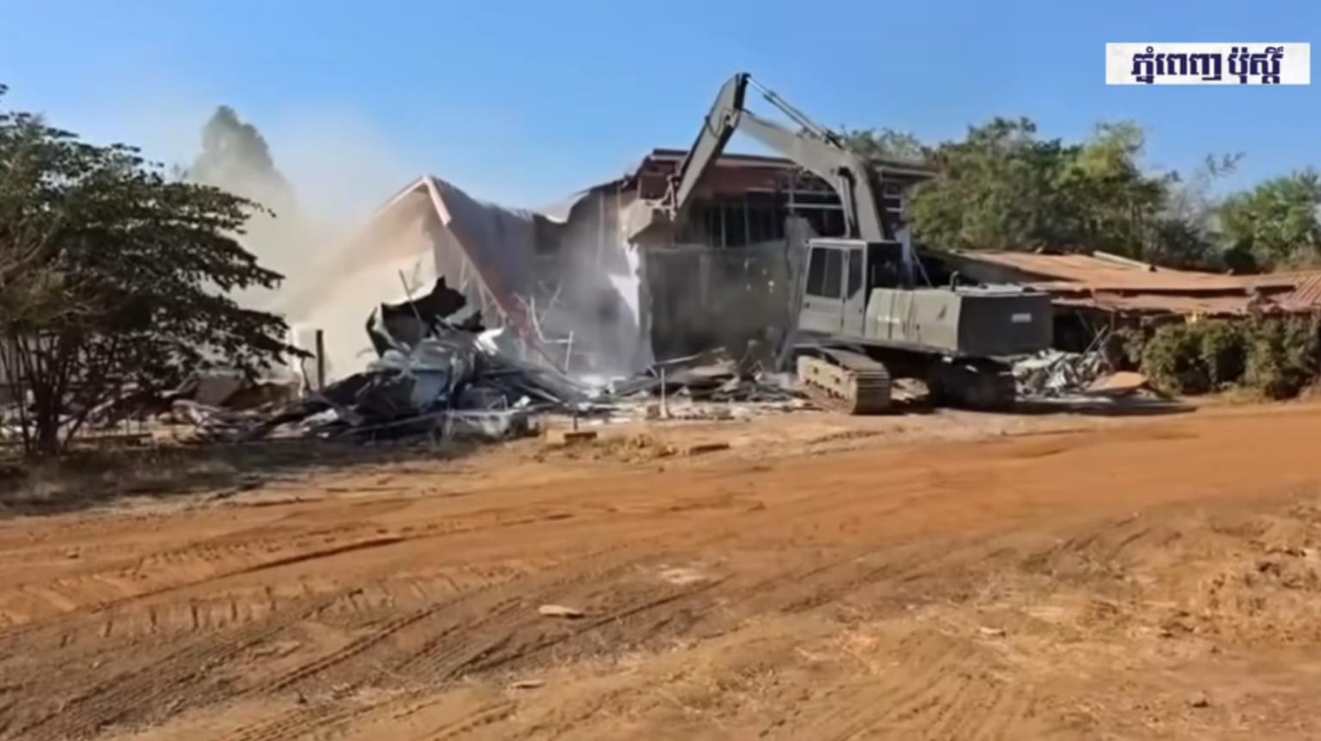
Phnom Penh, January 7, 2026. In his appeal titled “Silence”, Bishop Olivier Schmitthaeusler, Apostolic Vicar of Phnom Penh, denounced the destruction of Cambodian homes and sacred places along the Thai border, where bulldozers and barbed wire have left families displaced and children trapped in squalid camps. “What we are experiencing today certainly calls us to prayer, but not to silence,” the Bishop declared, urging the world to break its indifference.
His words resonate deeply with educators and pastoral workers in Cambodia, who see the immediate impact of such violence on the youngest and most vulnerable. When villages are razed and families uprooted, children lose not only their homes but also their classrooms, their teachers, and the daily rhythm of learning that sustains hope. The silence of international institutions becomes, in practice, the silencing of children’s voices and futures.
The Bishop broadened his vision to the global stage, recalling the tragedies of Ukraine, Gaza, Venezuela, and Cambodia itself, asking whether centuries of human effort to build democracy and freedom can be swept away in months of geopolitical cruelty. His question—“Is power only in the hands of the strongest?”—is also the question of every child who wonders why their right to education, play, and dignity is sacrificed to the interests of war.
For Don Bosco schools in Cambodia, the appeal is a reminder that education is itself an act of resistance against violence. Initiatives such as the Don Bosco Green Alliance Cambodia, the Brother Sun programme, and intercultural projects with Indigenous youth show that classrooms can become sanctuaries of peace, where dialogue replaces hostility and where young people learn to care for creation and for one another.
“Silence,” Bishop Schmitthaeusler noted, can be useful for prayer and discernment, but it must never mean complicity in injustice. For educators, this means raising their voices to defend the right of every child to learn, even in times of displacement. It means transforming temporary shelters into learning spaces, and ensuring that the trauma of war does not erase the possibility of a future.
The appeal concluded with the words of Pope Leo XIV: “Peace on earth, sing the angels, proclaiming the presence of a defenseless God… It is to be hoped that every community will become a house of peace, where hostility is defused through dialogue, where justice is practiced, and forgiveness is cultivated.”
For Cambodia, this call is urgent. To build houses of peace, we must also build schools of peace—places where children and youth, even amid suffering, can discover their dignity, their voice, and their hope.